
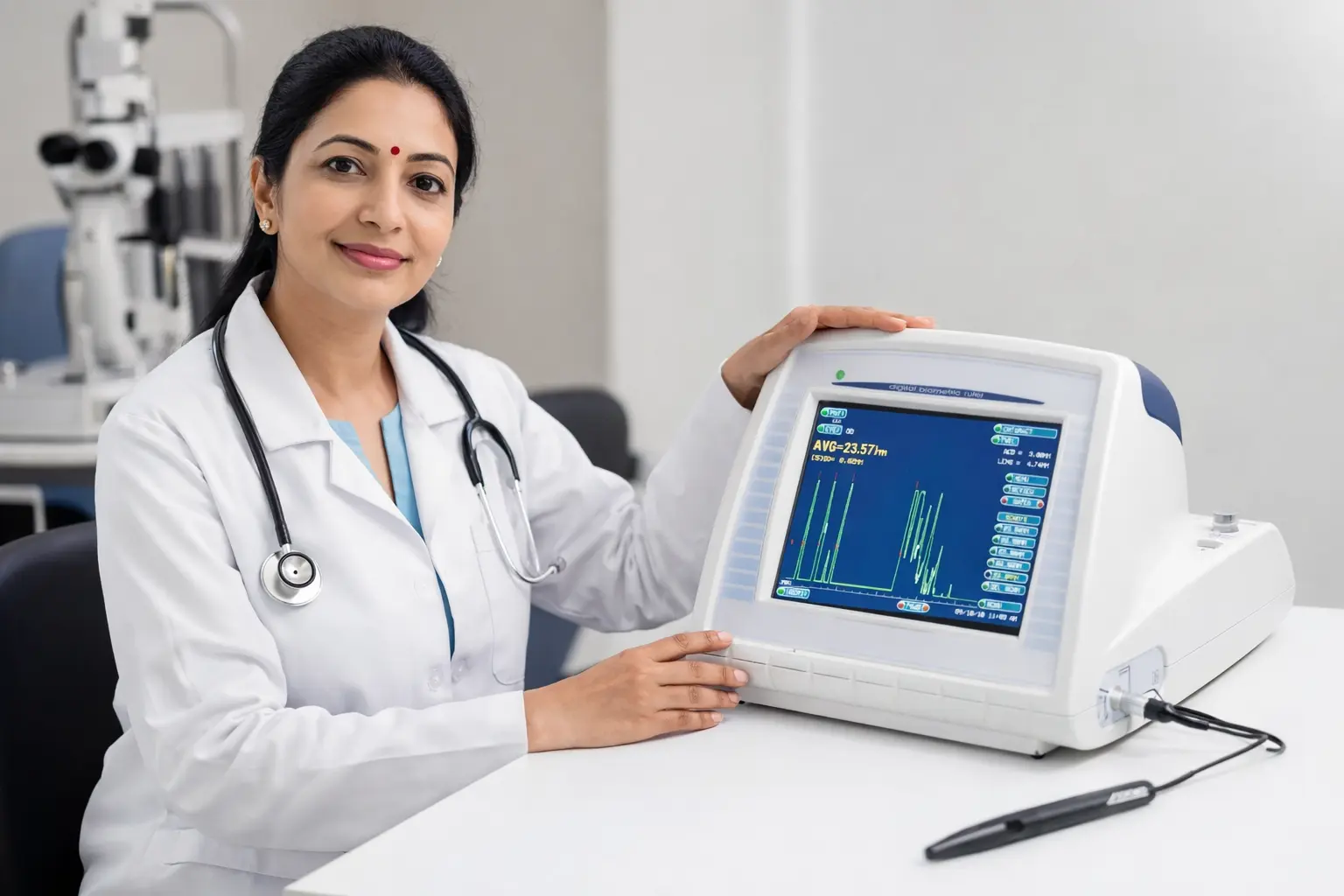
Cataract surgery has evolved into one of the most precise and successful procedures in modern ophthalmology. Patients today expect not only clear vision but also minimal dependence on glasses after surgery. Achieving such outcomes depends heavily on accurate pre-surgical measurements. This is where the Ophthalmic Biometer plays a critical role.
Understanding the Role of Biometry in Cataract Surgery
Before cataract surgery, ophthalmologists must calculate the correct power of the intraocular lens (IOL) that will replace the clouded natural lens. Even a small error in measurement can lead to postoperative refractive errors, affecting the patient’s vision.
Traditional measurement techniques relied on ultrasound-based systems, which required direct contact with the eye. While effective, these methods could sometimes produce slight inconsistencies due to corneal compression or operator variability. The introduction of the Ophthalmic Biometer has significantly improved this process by providing highly precise, non-contact measurements.
How an Ophthalmic Biometer Enhances Measurement Accuracy
An Ophthalmic Biometer uses advanced optical technologies such as optical low-coherence interferometry or swept-source optical coherence tomography to measure key ocular parameters. These include axial length, corneal curvature, anterior chamber depth, and lens thickness.
Because the device is non-contact, it eliminates the risk of corneal distortion during measurement. This results in more reliable data, which directly improves the accuracy of IOL power calculations. Many modern biometers also incorporate sophisticated calculation formulas that further refine surgical planning.
Additionally, automated alignment and high-resolution imaging help clinicians obtain consistent results across multiple measurements. This consistency is crucial when planning surgeries for patients with complex eye conditions or irregular corneas.
Benefits for Surgeons and Patients
Improved measurement precision translates into better surgical outcomes. With more accurate data, surgeons can select the most appropriate IOL power, reducing the chances of residual refractive error after surgery.
For patients, this means a higher likelihood of achieving the desired visual outcome, whether it is clear distance vision or reduced dependence on corrective eyewear. The efficiency of the measurement process also shortens examination time and improves overall patient comfort.
The Future of Cataract Surgery Planning
As ophthalmic technology continues to advance, diagnostic tools are becoming increasingly sophisticated. The Ophthalmic Biometer has already transformed the way surgeons plan cataract procedures by delivering reliable, repeatable measurements. With continued innovation, these devices will likely integrate even more advanced imaging and analytical capabilities, further enhancing surgical precision and patient satisfaction.
In today’s era of personalized eye care, accurate diagnostics are the foundation of successful treatment—and biometry remains at the center of that progress.