
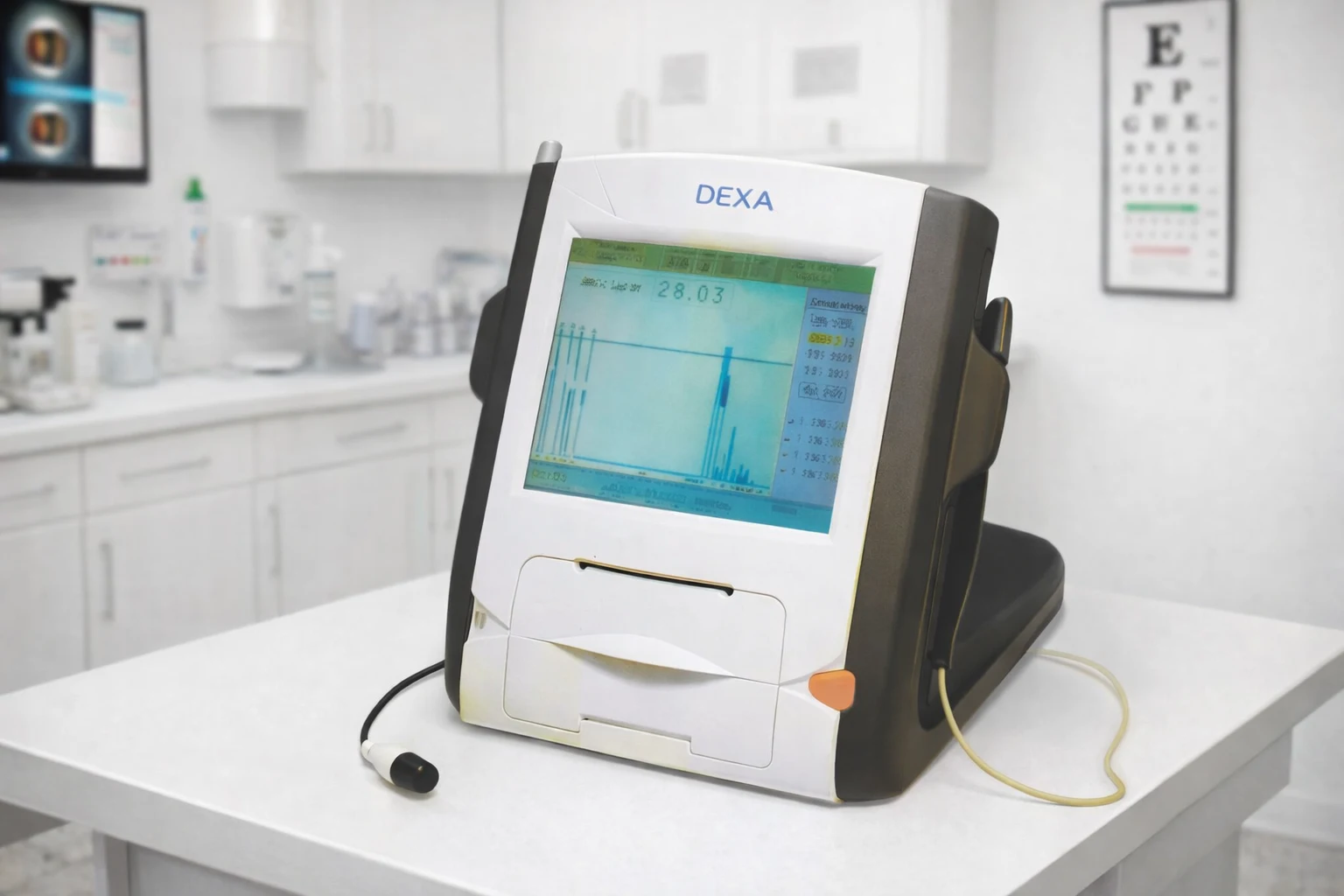
Modern eye care depends heavily on precision diagnostics, especially when planning surgical interventions such as cataract removal and intraocular lens implantation. One of the most essential tools supporting this precision is the Ophthalmic A-Scan/Biometer. Designed to measure the eye’s internal dimensions with remarkable accuracy, this diagnostic instrument plays a crucial role in helping ophthalmologists make informed clinical decisions and achieve optimal visual outcomes for patients.
Working Principles of the Technology
At its core, the Ophthalmic A-Scan/Biometer operates using ultrasound technology. It emits high-frequency sound waves that travel through different structures of the eye, such as the cornea, lens, and retina. When these sound waves encounter tissue boundaries, they reflect back to the probe.
By calculating the time taken for these echoes to return, the device determines axial length — the distance from the cornea to the retina — along with other essential measurements. Since even a small error in measurement can significantly affect surgical results, especially in intraocular lens power calculation, this technology is designed for high sensitivity and accuracy.
Some systems use contact methods where the probe gently touches the cornea, while others rely on immersion techniques to reduce corneal compression and enhance measurement precision.
Clinical Applications in Modern Eye Care
The primary use of the Ophthalmic A-Scan/Biometer is in preoperative cataract evaluation. Accurate axial length measurement ensures that surgeons can select the most appropriate intraocular lens power for each patient.
Beyond cataract surgery, it is also widely used in diagnosing and monitoring conditions related to abnormal eye length, such as high myopia or hyperopia. Additionally, it assists in pediatric ophthalmology, where monitoring eye growth is critical for managing developmental vision disorders.
Key Benefits for Patients and Practitioners
The value of this diagnostic technology lies in its ability to improve surgical predictability and patient outcomes. By providing reliable measurements, the Ophthalmic A-Scan/Biometer reduces the likelihood of refractive surprises after surgery.
It is also non-invasive, quick, and generally comfortable for patients, making it suitable for routine clinical use. For eye care professionals, it enhances diagnostic confidence and supports personalized treatment planning.
Precision is the cornerstone of successful ophthalmic treatment, and advanced diagnostic tools continue to elevate standards of care. By delivering accurate biometric data, the Ophthalmic A-Scan/Biometer remains an indispensable instrument in modern eye care, ensuring safer procedures, better visual results, and improved patient satisfaction.