
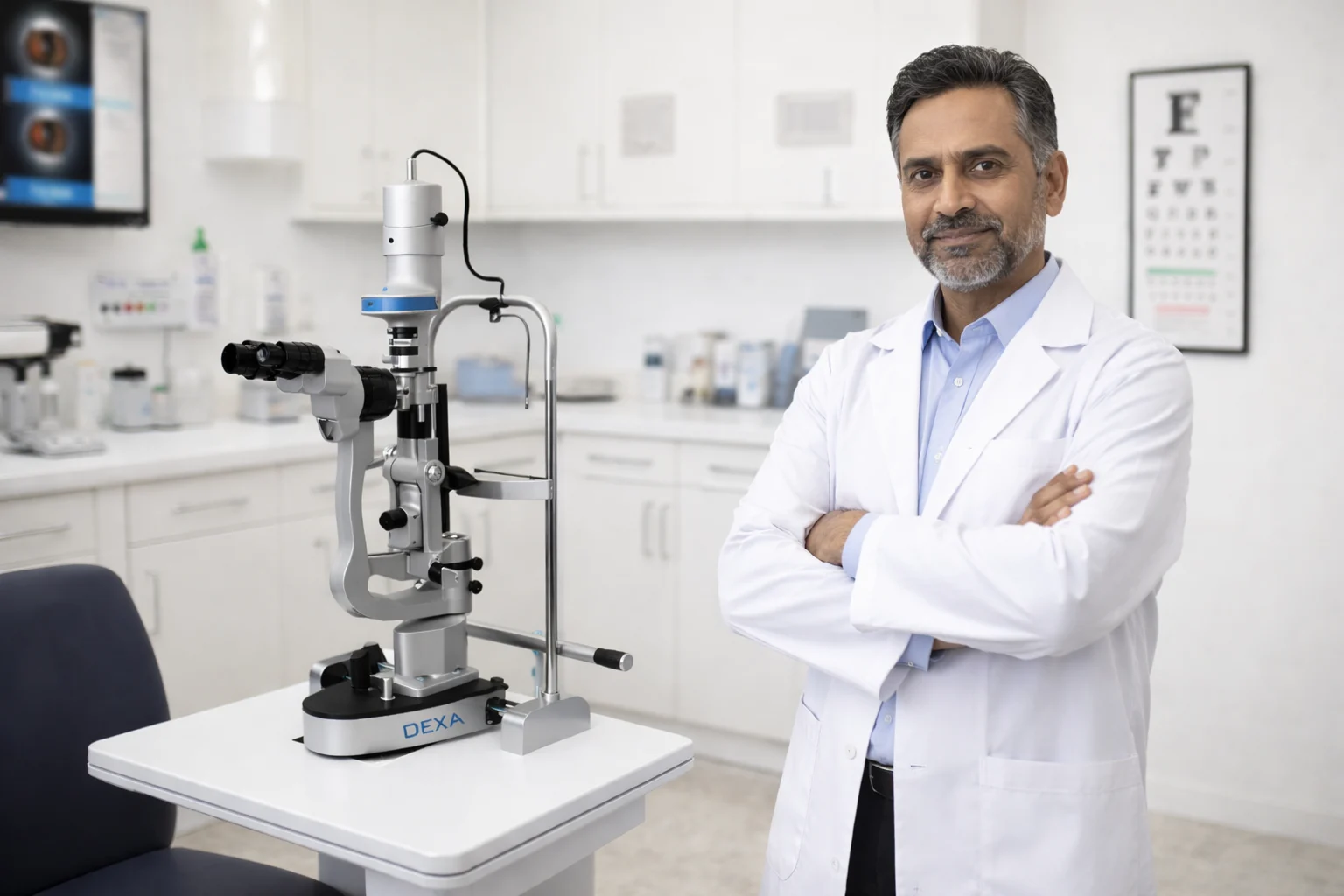
Modern eye care depends heavily on precise diagnostic instruments that allow clinicians to examine delicate ocular structures in detail. One of the most essential tools in ophthalmology is the Slit Lamp, a specialized microscope designed to provide a highly magnified, illuminated view of the eye. From routine vision checks to complex disease diagnosis, this instrument plays a central role in detecting and monitoring a wide range of eye conditions.
Understanding the Basic Principle
At its core, the Slit Lamp combines a high-intensity light source with a binocular microscope. The light is projected as a narrow, adjustable beam—often described as a “slit”—which can be focused on specific parts of the eye. By changing the angle, width, and height of the beam, clinicians can create cross-sectional views of different ocular layers.
This optical sectioning technique allows practitioners to observe fine structural details of the cornea, anterior chamber, lens, and even parts of the retina with exceptional clarity. The stereoscopic viewing system further enhances depth perception, making it easier to assess abnormalities that may not be visible with standard examination tools.
Key Components and Technology
The Slit Lamp consists of three main functional components working together seamlessly.
- Illumination System
This includes a bright, adjustable light source that produces the narrow beam used for examination. Filters may also be applied to enhance contrast or highlight specific tissues. - Biomicroscope
Mounted on a movable base, the microscope provides variable magnification, enabling detailed observation of ocular structures at different depths. - Mechanical Support System
A chin rest and forehead support help stabilize the patient’s head, ensuring accuracy and consistency during examination. Fine mechanical controls allow precise alignment of light and optics.
Advancements in digital imaging and video capture now allow many modern systems to document findings in real time, improving diagnostic accuracy and clinical record-keeping.
Clinical Applications in Eye Care
The Slit Lamp is widely used in both routine and specialized eye examinations. It helps detect common conditions such as cataracts, corneal injuries, dry eye syndrome, and infections. Ophthalmologists also rely on it to monitor glaucoma progression, evaluate contact lens fit, and assess post-surgical healing.
Beyond diagnosis, it plays an important role in treatment planning. By providing detailed visualization of ocular structures, clinicians can make more informed decisions and track disease progression with precision.
With its combination of focused illumination, magnification, and advanced optical design, this diagnostic instrument remains indispensable in modern ophthalmology. Its ability to reveal microscopic details of the eye ensures early detection, accurate diagnosis, and effective management of numerous vision-related conditions.